For aspirants looking to build their career and future, pursue advanced studies or gain permanent residency outside India, applying for Australian visa is a viable opportunity. The challenge, however, is the unnecessary visa delays that often occur during the visa application process. Awaiting a visa decision can be really frustrating, even when all the relevant documents have been submitted, as it can alter the course of employment opportunities, travel plans, create the fear of missing the deadline for a new semester.
The approval of Australian visas relies heavily on the visa subclass, the accuracy of the documents submitted, personal circumstances as well as the volume of applications. In some cases, the Department may require additional information such as character checks, health checks and background verification.
While individuals have no control over processing times, certain measures can be taken to avoid unnecessary delays by involving an experienced immigration agent in Melbourne. The Immigration Officers have professional expertise in choosing an appropriate route in visa application, handling all kinds of issues and challenges. They will assist you in preparing the necessary documents and communicating with the immigration authorities effectively in the process of obtaining a visa.
Understanding the Common Reasons Behind Australian Visa Delays
It is important to do the basic groundwork before applying for an Australian visa to understand the possible reason for delay in the process, since every application may have a different processing time.
A few reasons are listed here:
- If your documents are not in place, lack accurate information or are missing supporting documents, delays can occur.
- Selecting the right visa subclass is important, because it has to match your eligibility criteria and circumstances or else it may create complications.
- The immigration authorities may ask certain applicants to undergo additional background verification, police clearance or medical tests.
- The volume of applications received by the Department of Home Affairs is usually huge, as applications come from all across the world. Hence processing all of them takes time.
- Applicants who have applied for a skill migration visa may experience delay, as further checks may be required regarding their qualifications, skill documents and employment history.
- The documents submitted by an applicant may contain inconsistent information across different records, such as employment history and educational qualifications, or may lack supporting evidence.
A highly skilled immigration agent in Melbourne will be able to provide you with an insight on why there could be any delay and will analyze your documents first.
It is imperative to keep the above pointers in mind while submitting your applications, to avoid any delays or complications.
How an Immigration Agent in Melbourne Helps You Choose the Right Visa
Australian visas come in different categories or subclasses which are relevant for students, skilled workers, employers, dependent family members, and business aspirants. Every visa category has a different eligibility criterion, application procedures and document requirement.
An immigration agent in Melbourne can provide the right guidance by reviewing your application, personal circumstances, educational qualifications, financial history, as well as employment background, to advise you on which visa category will be suitable for you.
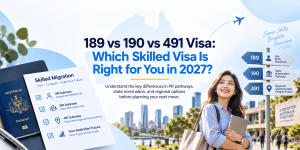
For instance, a skilled migrant can apply for subclass 189, 190 & 491 subject to their points score, occupation, state nomination eligibility and other requirements.
Likewise, applicants who are looking for a job in Australia may opt for an employer-sponsored visa subclass. Whereas, students can apply for a student visa while keeping the relevant admission & financial requirement in check. If you’re considering Australia for your international studies, you should also research the best courses to study in Australia based on their academic background, career goals and future opportunities before selecting an institution and course.
To sum it up, it is important to choose the correct visa pathway to ensure zero mistakes and avoid further assessments that can cause unnecessary delays.
Preparing Complete and Accurate Documents Before Submission
Aspirants should be careful when providing information while applying for Australia visa, as the accuracy of the documents is of utmost importance; since inaccurate information, contrasting details and lack of required evidence may invite additional enquiries/delays from the Department of Home Affairs.
An immigration agent in Melbourne can guide you on the right documentation requirements for the selected visa subclass and help you prepare your case for submission.
The list of required documents include:
- A valid passport & ID proofs
- Educational degrees, certificates and additional academic details
- Employment appointment letters, experience certificates, salary slips etc
- English proficiency test transcripts
- Skill assessment documents
- Police verification documents
- Medical test records
- Financial documents and bank statements
- Marriage certificate and other documents of dependents
Skilled migration applicants need to furnish additional documents along with a reference letter from their employer; such as pay slips, tax documents, bank statements, and appointment letters to support their employment evidence.
Procuring the above-mentioned documents, wherever applicable, according to the visa category applied, can ensure a smoother procedure and help avoid further delays from the Department of Home Affairs.
Ensuring Your Skills Assessment and Qualifications Are Properly Prepared
Applicants interested in applying for a specific skill migration pathway in Australia need to go through a skill assessment, which is an essential part of the procedure. The educational qualifications, the employment details/experience need to be aligned with the pre-defined assessment requirements. It is to be noted that the documentation criteria, assessment procedures, and processing times may vary for each visa subclass. An immigration agent in Melbourne can guide you step-by-step on how to proceed with the documentation process and identify gaps, if any.
Key details to look out for
Your selected occupation should match your educational qualifications and academic background for your chosen visa pathway
Aspirants need to ensure that all educational documents are in order & accurate.
If currently employed, applicants need to furnish supporting documents related to the employment, along with employer references.
Your skill assessment test results need to be valid within three years from the date of issue for most Australian skilled migration visa applications, subject to any shorter validity period specified by the assessing authority, and must meet the required criteria for your desired visa category.
The information provided by aspirants regarding employment details and qualifications should be assembled in a straightforward manner and must be 100% accurate and consistent
Preparing the documents in advance, that establish your skills, educational qualifications and professional background in advance of submitting your application, while keeping the above-mentioned points in mind, can help you lead to a positive visa outcome.
Helping You Respond to Additional Information Requests
In some instances, the Department of Home Affairs may seek for more documentation once the application process is already done to facilitate a smooth assessment and approval process. These may include personal information and essential supporting documents, but this does not automatically mean that your application will be refused. However, there are many instances where the Australian government officials might require more data in order to obtain evidence before making any decision.
Responding incorrectly or failing to provide the requested information within the specified timeframe can prevent you from gaining the desired exposure after settling in Australia and can lead to recurring refusals. It can also create further complications and result in a roller coaster experience throughout your visa application process.
A professional from the Department of Immigration and Citizenship in Melbourne can assist you with your application requirements, and at the same time help you consider options for studying, working, or settling in Australia. They can identify the documents required, and prepare an appropriate response.
For example, an applicant may be asked to provide:
- Additional and useful documentary evidence of previous employment
- Updated financial records such as balance sheet, income statement, cash flow statement and statement of shareholders’ equity.
- Additional details about their educational qualifications including formal academic credentials earned by an individual by completing recognised courses or examinations at schools, colleges, or universities.
- Updated police clearance certificates, whether applying for residency, employment, a long-term visa or immigration.
- Clarification relating to previous visa applications and travels
Professional guidance can be a transformative step in many areas of life, including Australian visa assistance. It can help ensure that your response addresses the specific concerns raised by the Department and save you from unnecessary hassles and personal challenges.
Applying for an Australian visa feels stressful and the wait can be overwhelming. Instead of constantly wondering about the outcome, check your email regularly and monitor your ImmiAccount, as official requests and application updates may be communicated through your account. This will help you track your visa status in real time and stay ahead of every step.
Keeping Up With Changes in Australian Immigration Rules
The Australian government keeps announcing new changes to its migration policies. Similarly, visa requirements, and processing priorities can change. These changes may cause migration issues and can have an impact on the criteria that are used for visa subclasses.
For example, skilled migration applicants need to remain aware of all of the announced measures and changes that come into effect such as occupational criteria, state and territory nomination criteria, points test criteria, and processing priority considerations.
Similarly, international students and employer-sponsored applicants must understand the latest requirements applicable to their respective visa categories, including changes to visa conditions, regulations and administrative arrangements. An immigration agent in Melbourne can help you stay informed about relevant changes and understand how they may affect your application strategy and assess how they can materially affect your chances of obtaining an Australian visa. This service is extremely important when applying for an Expression of Interest (EOI) or state nomination and even when switching from temporary visas to permanent residency.
However, applicants should remember that an immigration agent can only provide immigration consultancy, guidance and services and cannot guarantee that an application will be processed faster or influence the department’s decision. They can also assist you in preparing your application to avoid any errors or mistakes that can occur.
Monitoring Your Visa Application and Processing Updates
Applicants need to monitor their applications by using ImmiAccount to check the status of their visa applications, upload additional documents, change or update their contact details and respond to communications from the Department of Home Affairs.
An immigration agent can be of help to guide you on how to monitor the status of your application while ensuring that you do not miss important deadlines. Therefore appointing an immigration agent as your authorised representative is a wise choice.
Every application may have a different processing timeline for each individual, as the processing of a visa subclass by the Department depends on various factors, such as the complexity of a particular case, external background verification checks, number of applications received and whether any information is missing.
The Department of Home Affairs keeps updating visa processing times, which can be leveraged by the applicants for their respective visa category. Checking these updates can help you maintain realistic expectations and plan your next steps accordingly.
Choosing the Right Immigration Agent in Melbourne
Moving to Australia can be an exciting step. Whether your goal is to study, work, make a career, or settle down there eventually, choosing the appropriate professional is yet another factor that you need to consider while applying for your Australian visa. Prior to making plans about living in Australia, you should know that not all immigration agents provide the same amount of experience and help in visa categories.
Before appointing an immigration agent in Melbourne, consider the following:
- Registration and credentials: Given there are a lot of Australian immigration consultants in Australia, ensure that the agent you choose is registered with OMARA (Office of the Migration Agents Registration Authority).
- Relevant experience: Look for experience with your particular visa subclass and immigration pathway. Working with an inexperienced migration consultant can be confusing. Every consultant may promise professional guidance, quick processing but having relevant experience is important.
- Fee transparency: Take into account the fees that apply to professional services and governmental charges, among other costs.
- Clear communication: Select an agent who can carefully explain documentation, eligibility requirements, application procedures, visa conditions and potential challenges carefully.
- Realistic expectations: Choosing the wrong migration agent can create unnecessary delays or complications. Be cautious of anyone promising guarantee visa approval as it might be their marketing tactics to allure applicants, students and skilled workers.
In Australia, the individuals who provide immigration assistance in return for a fee must generally be registered migration agents, Australian legal practitioners, or fall within an application exemption. You may check the migration agent’s registration on the OMARA register.
A suitable professional will assist you to make informed choices during your application process.
Conclusion
Australian visa delays can create uncertainty for skilled workers, students, and other applicants. However, proper preparation, accurate documentation, and a clear understanding of visa requirements can help reduce avoidable application errors.
Working with an experienced immigration agent in Melbourne can help you understand suitable visa options, organise supporting documents, assess eligibility, and respond to additional information requests. Professional guidance can make the application process easier to manage, although it cannot guarantee faster processing or visa approval.
Before submitting your application, make sure you meet the relevant eligibility criteria, provide all required documents, and carefully review your details. Taking these steps can help you avoid unnecessary mistakes and move forward with greater confidence in your Australian visa journey.