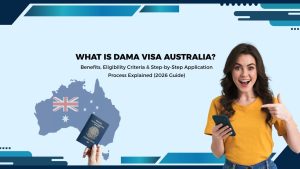
The DAMA visa Australia pathway has become one of the most important regional migration options for skilled and semi-skilled workers looking to move to Australia. Unlike standard skilled migration programs, DAMA is specifically designed to address labour shortages in regional areas by allowing approved employers to sponsor overseas workers under more flexible conditions.
As Australia continues to face workforce shortages in key industries such as healthcare, hospitality, agriculture, and construction, DAMA agreements are becoming increasingly relevant for applicants who may not qualify under traditional visa routes.
This guide explains everything you need to know about the DAMA program Australia, including eligibility requirements, benefits, visa types, and the step-by-step application process.
What is DAMA Visa Australia?
The DAMA visa Australia program is not a standalone visa. Instead, it is a special labour agreement framework between the Australian Government and designated regional authorities such as state governments, territory administrations, or regional development bodies.
Under this arrangement, specific regions can sponsor overseas workers for occupations that are in shortage locally but may not be available under Australia’s standard skilled occupation lists.
Unlike traditional employer-sponsored visas such as the Temporary Skill Shortage (Subclass 482) or Employer Nomination Scheme (Subclass 186), the DAMA program Australia provides:
- Access to a wider range of occupations (including semi-skilled roles)
- Lower English language requirements for selected occupations
- Salary concessions in certain regional areas
- Flexible age requirements in some cases
- Structured pathway to permanent residency (subject to conditions)
The first DAMA agreement was introduced in 2015 in the Northern Territory, and since then multiple regions across Australia have adopted their own DAMA frameworks tailored to local labour shortages.
How DAMA Immigration Australia Works: Two-Tier Structure
Understanding DAMA immigration Australia requires knowing its two-layer system. It is not a direct visa category but operates through existing visa subclasses under a labour agreement model.
Layer 1: DAMA Labour Agreement
The first stage involves a formal agreement between:
- Australian Government (Department of Home Affairs)
- Regional authority (state/territory or designated body)
This agreement defines:
- Occupations in demand within the region
- Available concessions (English, salary, age, etc.)
- Sponsorship conditions for employers
- Eligibility rules for overseas workers
Layer 2: Visa Subclass Application
Once the labour agreement is in place, approved employers can sponsor overseas workers under existing visa categories:
- Subclass 482 (Temporary Skill Shortage Visa) – most common DAMA entry pathway
- Subclass 494 (Skilled Employer Sponsored Regional Visa) – regional visa with PR pathway
- Subclass 186 (Employer Nomination Scheme) – permanent residency pathway (in selected DAMA streams)
This means the dama work visa Australia is a migration framework layered over existing visa systems, not a separate visa product.
Why the DAMA Program Australia Exists
Australia’s regional areas consistently face workforce shortages across multiple industries. These shortages are often difficult to fill locally due to population distribution and skill availability gaps.
Key sectors affected include:
- Hospitality and tourism
- Healthcare and aged care
- Agriculture and farming
- Construction and trades
- Manufacturing and logistics
To solve these shortages, the DAMA program Australia was introduced as a targeted solution allowing regions to access overseas talent more flexibly.
This helps:
- Support regional economic growth
- Reduce labour shortages
- Encourage population distribution outside major cities
- Strengthen essential service delivery in rural Australia
Key Features of DAMA Visa Australia
Below is a structured overview of the main DAMA features:
| Feature | Details |
| Program Type | Employer-sponsored regional migration under labour agreements |
| Coverage | Designated regional DAMA areas only |
| Occupation Flexibility | Broader occupation list including semi-skilled roles |
| English Requirement | Concessions available depending on occupation |
| Salary Threshold | May include concessions under approved agreements |
| PR Pathway | Available in selected streams (conditions apply) |
| Employer Role | Must be approved under DAMA labour agreement |
Types of Visas Under DAMA Work Visa Australia
The DAMA work visa Australia pathway operates through existing visa subclasses.
1. Subclass 482 (Temporary Skill Shortage Visa)
- Most common DAMA entry visa
- Valid up to 4 years
- Requires employer sponsorship
- Concessions on English and salary in some DAMA regions
2. Subclass 494 (Skilled Employer Sponsored Regional Visa)
- Designed for regional Australia
- Valid up to 5 years
- Offers PR pathway through Subclass 191
- Requires work in designated regional area
3. Subclass 186 (Employer Nomination Scheme)
- Permanent residency visa
- Available in limited DAMA streams
- Requires employer nomination and eligibility conditions
Eligibility Criteria for DAMA Visa Australia
Eligibility is divided into employer requirements and applicant requirements.
Employer Eligibility
To sponsor under DAMA:
- Business must be located in a designated DAMA region
- Must demonstrate genuine labour shortages
- Must pass Labour Market Testing (LMT)
- Must receive endorsement from regional authority (DAR)
- Must enter into a DAMA labour agreement with the government
Not all employers qualify automatically. Approval is required before sponsorship begins.
Worker Eligibility
Applicants must:
- Have relevant qualifications or work experience
- Be nominated for an approved DAMA occupation
- Meet English requirements (concessions may apply)
- Be willing to live and work in regional Australia
Some DAMA agreements also allow access to occupations not available under standard skilled migration lists.
Check Your Australia PR Eligibility in 2026
Get a free expert assessment based on your profile, occupation, and visa options.
Check My PR EligibilityRequirements for DAMA Visa Australia
Skills and Experience
- Relevant education or work experience
- Skills aligned with nominated occupation
- Skills assessment may be required in some cases
English Requirements
- Standard requirement: IELTS 5.0 overall (varies by visa)
- DAMA concessions: as low as IELTS 4.5 in selected occupations
- Requirements depend on region and occupation
Age Requirements
- Usually under 45 years for PR pathways
- Some DAMA agreements allow age exemptions for high-demand jobs
Salary Requirements
- Must meet Annual Market Salary Rate (AMSR)
- Some concessions apply under TSMIT framework
- TSMIT updated benchmarks:
- ~AUD 76,515 (2025–26 projection range)
- ~AUD 79,499 (2026–27 projection)
Health & Character
- Medical examination required
- Police clearance mandatory
- Standard immigration compliance applies
Benefits of the DAMA Visa Australia
1. Wider Occupation Access
Includes occupations not available under standard skilled migration lists, including semi-skilled roles.
2. Lower Entry Barriers
Flexible requirements for:
- English
- Salary
- Age (in some cases)
3. Regional Job Opportunities
Strong demand in regional Australia provides better job access for migrants.
4. Pathway to Permanent Residency
Many DAMA streams allow PR transition through Subclass 186 or 191 visas.
5. Employer-Supported Migration
Applicants receive structured sponsorship from approved employers.
Step-by-Step Application Process for DAMA Visa Australia
Step 1: Choose a DAMA Region
Identify a region where your occupation is in demand.
Step 2: Secure Employer Sponsorship
Get a job offer from a DAMA-approved employer.
Step 3: Employer Endorsement
Employer applies for regional authority endorsement.
Step 4: Labour Agreement Approval
Employer enters DAMA labour agreement with the government.
Step 5: Visa Nomination
Employer nominates the worker under eligible visa subclass.
Step 6: Visa Application
Applicant submits visa application (482/494/186).
Step 7: Assessment
Department of Home Affairs assesses eligibility, health, and documents.
Processing Time for DAMA Work Visa Australia
Processing times vary depending on:
- Employer labour agreement approval
- Visa subclass selected
- Document completeness
- Verification requirements
Generally:
- Labour agreement approval: several weeks to months
- Visa processing: varies by subclass
DAMA Visa vs Skilled Migration Visa
| Factor | DAMA Visa Australia | Skilled Migration |
| Sponsorship | Required | Not always required |
| Flexibility | High in regional areas | More restrictive |
| Occupations | Broader list | Skilled occupation list only |
| PR Pathway | Conditional | Direct pathways available |
| Location | Regional only | Nationwide options |
Who Should Apply for DAMA Visa Australia?
The DAMA visa Australia pathway is ideal for:
- Semi-skilled workers not eligible for standard visas
- Applicants with moderate English proficiency
- Individuals willing to live in regional Australia
- Candidates seeking employer-sponsored migration pathways
It is particularly useful for applicants who may not qualify under traditional skilled migration programs but still have valuable work experience.
Final Thoughts
The DAMA program Australia provides a flexible and practical migration pathway for individuals who want to work and settle in regional Australia. With its relaxed requirements, broader occupation access, and structured employer sponsorship model, it has become a strong alternative for many skilled and semi-skilled workers.
Check Your Australia PR Eligibility in 2026
Get a free expert assessment based on your profile, occupation, and visa options.
Check My PR EligibilityHowever, success depends on:
- Choosing the right DAMA region
- Securing a genuine employer sponsorship
- Meeting occupation-specific requirements
- Following correct visa pathways
For applicants considering the Australia DAMA visa, proper planning and understanding of regional requirements are essential for a successful outcome.
Frequently Asked Questions
1. What is DAMA visa Australia?
It is a regional employer-sponsored migration framework allowing overseas workers to work in shortage occupations.
2. Is DAMA a permanent visa?
No, but it can lead to PR through specific visa pathways.
3. Can I apply without a job offer?
No, employer sponsorship is mandatory.
4. Which visa is used under DAMA?
Mainly Subclass 482, 494, and 186 visas.
5. Is English required for DAMA?
Yes, but concessions may apply depending on occupation.